AMELIA MCGOVERN

01

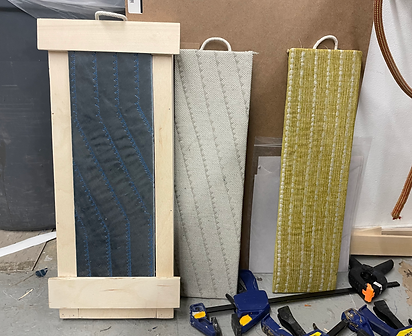
Kitty Canvas is an interactive system that transforms natural feline scratching into a work of art. The product uses a solid wood frame and modular, refillable panels made with designer upholstery-grade fabric to promote a "refill-not-replace" model. It was created for the Non-human Furniture Design studio class at the Rhode Island School of Design (RISD).
As the cat sharpens its claws, the top layer wears away, revealing the different colors and patterns beneath.
Non-human Design | 2026
KITTY CANVAS

Designer Modular Panels
Once the cat has finished its "canvas," it can be replaced with new canvases. These slide-in panels feature designer upholstery fabrics chosen for their high-end, furniture-grade aesthetic, which complements any modern home.
PROCESS


Material Selection
My research focused on identifying a textile with the ideal failure point, balancing visual appeal with intentional fray. I selected a high-denier furniture-grade upholstery fabric for its tensile strength and abrasion resistance, making sure it could withstand intense mechanical stress. I searched for materials that fray into a deliberate fringe rather than pilling which allows the bold colors and patterns underneath to emerge gradually to reveal a priceless art piece!
Strategic Layering
I selected these specific textiles so the "reveal" would be visually striking as the cat engages with the surface.

Circular Hardware:
The Slide-In Track System
I engineered a solid-wood frame with an integrated slide-in track system, shifting the product toward a circular "refill-not-replace" model.
Scratch Testing Demo
During the final review, I used scissors to simulate cat scratching. This provided a live look at the transition from the top upholstery layer, revealing the new colors and patterns beneath.


This wall-mounted sculpture reinterprets the "animal trophy" by merging a human face with sustainable textiles.
My project began with hand-drawn sketches and a custom mold formed from my own face. I stuffed it with natural wool and applied recycled cotton fabric designed with hand-carved block print.
For the final finish, I hand-beaded it with vintage materials sourced from estate sales to add texture and history. This project serves as a study in "waste-to-wealth," elevating forgotten materials into a high-end art object.
02
Waste-to-Wealth Textile Sculpture
RHINO
PROCESS
Concept Board
The project began with hand-drawn concept sketches to map the form's geometry and visualize how patterns would wrap around the physical structure.


Building the Structure
To ensure a lifelike, organic presence, I used a custom mold of my own face as the anatomical foundation for the piece and filled it with natural wool stuffing sourced from a textile salvage yard,.


HAND-BLOCKING
Hand-Carved Stamp
The surface design was created with a carved block, experimenting with patterns and textures inspired by traditional textile techniques. After stuffing the Rhino, selected areas were beaded.


I chose a vibrant pink and green palette to create a high-contrast, modern look
03
LICHEN-INSPIRED SCULPTURE
Bio-inspired sculpture investigating the codependent nature of lichen, an organism formed through the partnership of fungi and algae. Each relies on the others for survival, with the fungus providing structure and protection while the algae create food through photosynthesis.

Concept Work
After observing lichen under a microscope, I created a sculpture using modeling clay, cotton, and yarn layered with glue around a tree branch. I translated the intricate growth patterns of lichen into a tactile, three-dimensional form.
Lichens are fascinating organisms formed through a symbiotic relationship between a fungus and one or more photosynthetic partners. They often grow on tree bark and rocks, thriving in environments that are difficult for other life forms to survive.
Cryptothecia Rubrocincta

Lichen under a microscope

Cup formations of Lichen close up
I was drawn to the vibrant colors and unique cup-like forms of Cryptothecia Rubrocincta, commonly known as the “Christmas Wreath Lichen”.

Final result!
